Understanding Cocopeat EC Levels: Low EC vs High EC for Commercial Growers
CBS Agronomy & Export Technical Team
PT Ridha Dua Keluarga • Sidoarjo, East Java, Indonesia

Technical Abstract & Key Parameters
Why electrical conductivity (EC) is the single most critical quality parameter when sourcing cocopeat blocks from Indonesia, and how washed low EC substrate prevents root burn.
When commercial growers, substrate blenders, and hydroponic operators source bulk cocopeat blocks from Indonesia, one technical parameter dominates the pre-shipment specification sheet: Electrical Conductivity (EC).
A block of cocopeat can look identical in color, texture, and compression ratio whether its EC is 0.3 mS/cm or 2.8 mS/cm. But in a greenhouse irrigation system, that difference is the line between healthy root development and catastrophic salt burn.
What Does EC Measure in Cocopeat?
Electrical conductivity measures the concentration of soluble salts dissolved in the moisture of the growing medium. Raw coconut husk naturally absorbs sodium (Na+) and potassium (K+) during coastal growth and traditional pond soaking.
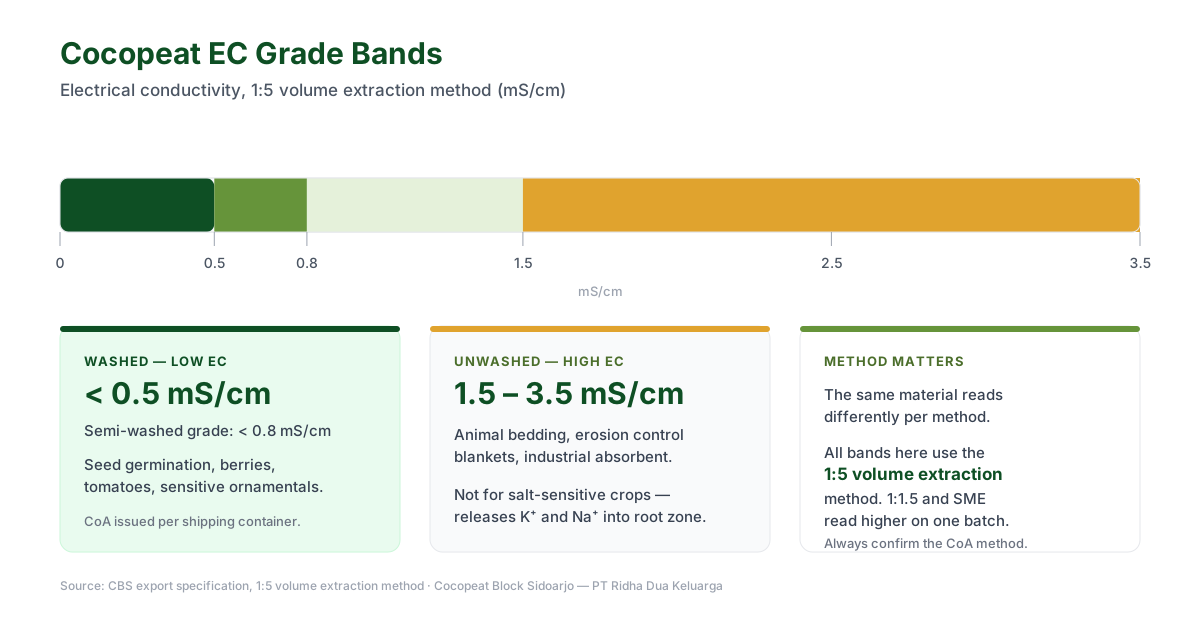
When husks are processed into raw pith (coir dust) without fresh water washing, these salts remain bound to the cation exchange sites of the coir fiber:
- Unwashed Cocopeat (High EC): Typically ranges from
1.5 mS/cmto3.5 mS/cm(1:5 dilution method). Suitable for animal bedding, erosion control blankets, and industrial absorbent use where plant root sensitivity is not a factor. - Washed Cocopeat (Low EC): Rinsed thoroughly with clean fresh water until soluble salts drop below
< 0.5 mS/cm(or< 0.8 mS/cmfor semi-washed grades). Essential for seed germination, berries, tomatoes, cannabis, and sensitive ornamental crops.
Why High EC Burns Sensitive Crops
Coir naturally has a high cation-exchange capacity (CEC) loaded with sodium and potassium ions. In an unwashed substrate, these ions displace calcium and magnesium from the nutrient solution fed by the grower.
The grower observes two simultaneous problems:
- Osmotic Stress: High salt concentration around the root zone makes it difficult for plants to pull moisture through cell membranes, mimicking drought symptoms even when moisture is abundant.
- Nutrient Lockout: Calcium and magnesium deficiency appears in young foliage despite balanced liquid fertilization, as the raw coir strips Ca2+ from the fertigation stream.
Fresh Water Washing vs Saline Processing
The quality of washed cocopeat depends fundamentally on the source water used during processing. At our cocopeat block plant in Sidoarjo, East Java, processing water is continuously monitored to guarantee that the rinse cycle displaces sodium ions without introducing chlorine or heavy mineral residues.
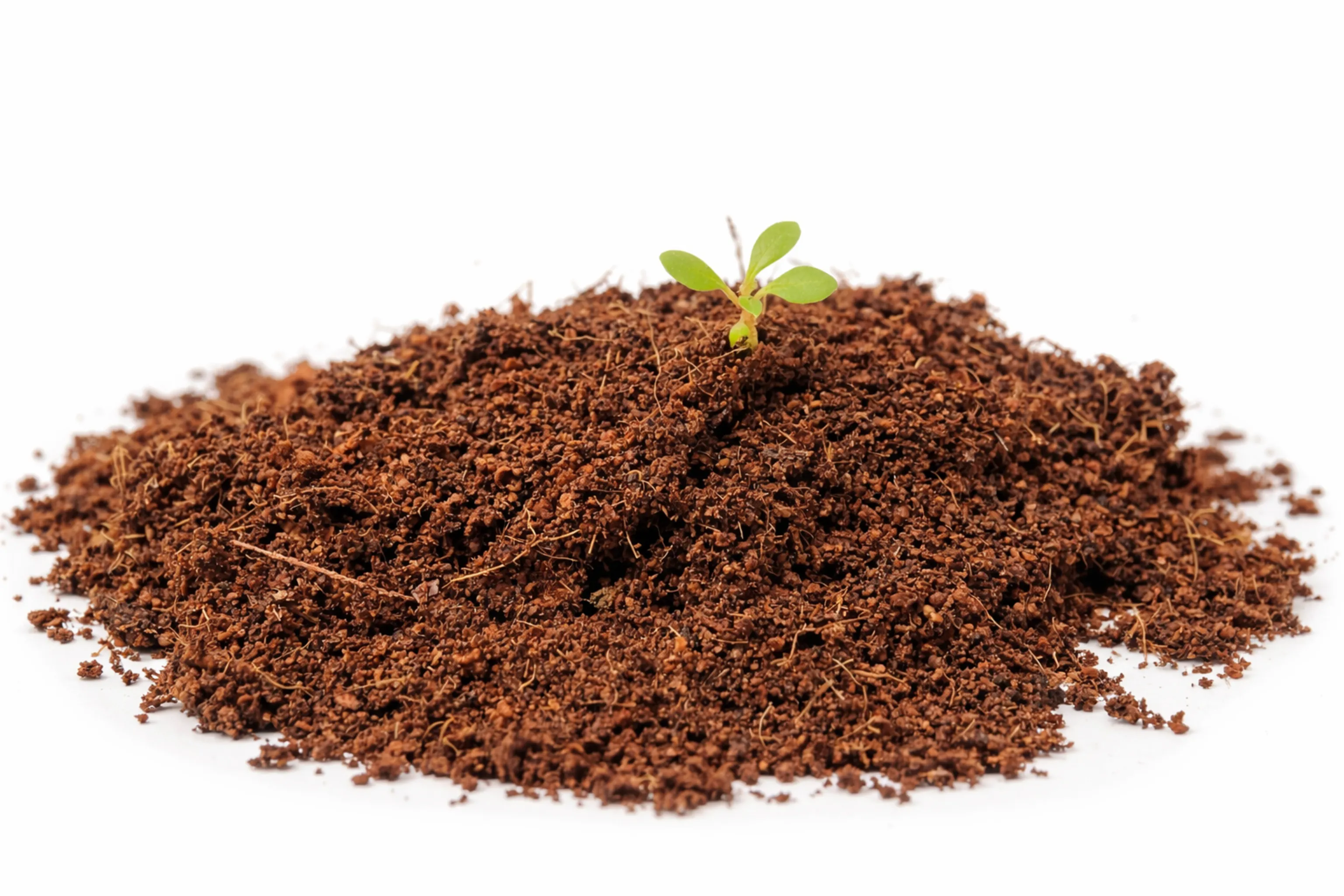
Every batch destined for horticultural export undergoes a strict QA protocol:
- Moisture content: Maintained between 15% and 20% prior to 5:1 hydraulic compression.
- Reconstitution ratio: Minimum 14 to 15 liters of expanded substrate per kilogram of block (approx. 70 to 75 liters per 5kg block).
- Batch EC verification: Tested using the standard 1:5 volume extraction method, accompanied by an official Certificate of Analysis (CoA) per shipping container.
Sourcing Checklist for Commercial Buyers
Before committing to full container load (FCL) orders of 5kg cocopeat blocks, commercial buyers should confirm four technical details with their supplier:
- Testing method used on CoA: Ensure whether the quoted EC is based on 1:5 dilution, 1:1.5 extraction, or saturated paste extract (SME). A reading of 0.5 mS/cm under 1:5 translates to roughly 1.5 mS/cm under SME.
- Washing water source: Reject material washed with brackish or coastal estuary water.
- pH stabilization: Verify that post-wash pH sits reliably between 5.5 and 6.5.
- Fumigation and Phytosanitary Certification: Confirm port-of-entry compliance (AFAS / ISPM 15 standards) to prevent customs clearance delays.
Related Keywords & Topics
Technical Citations & Referenced Standards
Standard testing methods, government regulations, and industry benchmarks cited in this document.
CBS Agronomy Notes
Sourcing 5kg Cocopeat Blocks for Commercial Agriculture?
Receive customized EC/pH lab certificates, container stuffing simulation (palletized or floor loaded), and FOB Tanjung Perak pricing.
Related Technical Notes
View all →
12 October 2026
Cation Exchange Capacity (CEC) in Coir Substrates: Calcium Buffering vs Plain Water Washing
Why raw cocopeat releases potassium and sodium during cultivation, and how calcium nitrate buffering compares with plain water washing on CEC, EC, and crop safety.

12 October 2026
DAFF Biosecurity Compliance: Exporting Cocopeat to Australia Without Costly Delays
BICON coir peat conditions, contaminant limits, container hygiene and khapra beetle exposure for exporting Indonesian cocopeat to Australia.