DAFF Biosecurity Compliance: Exporting Cocopeat to Australia Without Costly Delays
CBS Agronomy & Export Technical Team
PT Ridha Dua Keluarga • Sidoarjo, East Java, Indonesia

Technical Abstract & Key Parameters
BICON coir peat conditions, contaminant limits, container hygiene and khapra beetle exposure for exporting Indonesian cocopeat to Australia.
Australia is one of the highest-value destination markets for horticultural-grade cocopeat, and simultaneously one of the most demanding biosecurity jurisdictions on earth. For substrate blenders, berry producers, and protected-cropping operations in Queensland, Victoria, New South Wales, and Tasmania, imported coir is now a structural input rather than a novelty: Australian nurseries have been migrating off imported Northern Hemisphere peat for years on supply-chain and input-cost grounds, and the Asia-Pacific coir supply chain is short, reliable, and available at production volume.
The failure mode for exporters is almost never the cocopeat itself. It is what travels with the cocopeat: a container that was not washed six-sided, a stray soil residue in a twist-lock fitting, a viable seed in a compressed bale, or a missing packing declaration. Every one of those triggers the same outcome — a hold, an onshore treatment at the importer's expense, or worst case a re-export, all while the container accrues detention at an approved arrangement site.
This guide sets out the compliance architecture as it stands for the 2026 shipping season: what DAFF regulates, what is genuinely verified on arrival, where Indonesian origin carries a structural advantage, and which documents must be correct before the container leaves Tanjung Perak.
1. What BICON Actually Regulates: End-Use Determines Everything
The single most consequential mistake importers make is assuming "cocopeat" maps to one rule. Australian biosecurity import conditions are set by end use and formulation, not by product name. The governing instrument is the BICON Coir peat case, which describes requirements for coir peat imported for use as a growth medium (plugs, inserts, pots), mulch, or fertiliser, typically shipped as compressed bricks or bales. The case is actively maintained — it has been re-issued several times through 2026, with the current version effective from 1 October 2026, so the live case must be read before every booking.
The critical split is between plain coir and coir with additives:
| Product Formulation | End Use Declared | Import Permit | Key Additional Requirement |
|---|---|---|---|
| Plain, unused coir peat — compressed 5kg blocks / bales | Growth medium | Not required when BICON conditions are met | Consignment must satisfy cleanliness and inspection conditions |
| Coir peat with additives (wetting agents, nutrients, polymers, biologicals) | Growth medium / fertiliser | Required | Additives present a different biosecurity risk pathway |
| Coir peat blended into a potting mix or soil conditioner | Potting mix / soil conditioner | Required | Manufacturer's production questionnaire must accompany the permit application |
| Coir peat declared as a plant-based fertiliser | Fertilisers | Required | BICON Fertilisers case pathways plus manufacturer questionnaire |
| Pure coir pith — animal bedding or industrial absorbent | Non-horticultural | Separate BICON case | Not covered by the Coir peat case |
Three operational consequences follow directly from that table:
- Never upgrade the declared end use casually. A marketing label that mentions "organic fertiliser" or "nutrient-enriched" can convert a permit-free pathway into a permit case. Certificate of Analysis wording and commercial invoice descriptions must match the BICON pathway the importer lodged.
- The permit is the importer's obligation, but the timeline is the exporter's problem. DAFF explicitly advises permit applications be lodged well ahead of arrival. For coir peat with additives, the manufacturer — not the importer — completes the production questionnaire covering packaging and facility quality controls. An exporter without a pre-prepared technical dossier will lose weeks.
- Pure, consistent, single-spec blocks are commercially superior to blended products in this market. The more you add, the more regulatory surface you create.
2. The Four Contaminant Classes DAFF Verifies On Arrival
Coir peat is admitted without an import permit when conditions are met, but every consignment is subject to verification inspection. The inspection is not a formality, and it is not a check of your Certificate of Analysis. It is a physical verification that the goods are free of four contaminant classes.
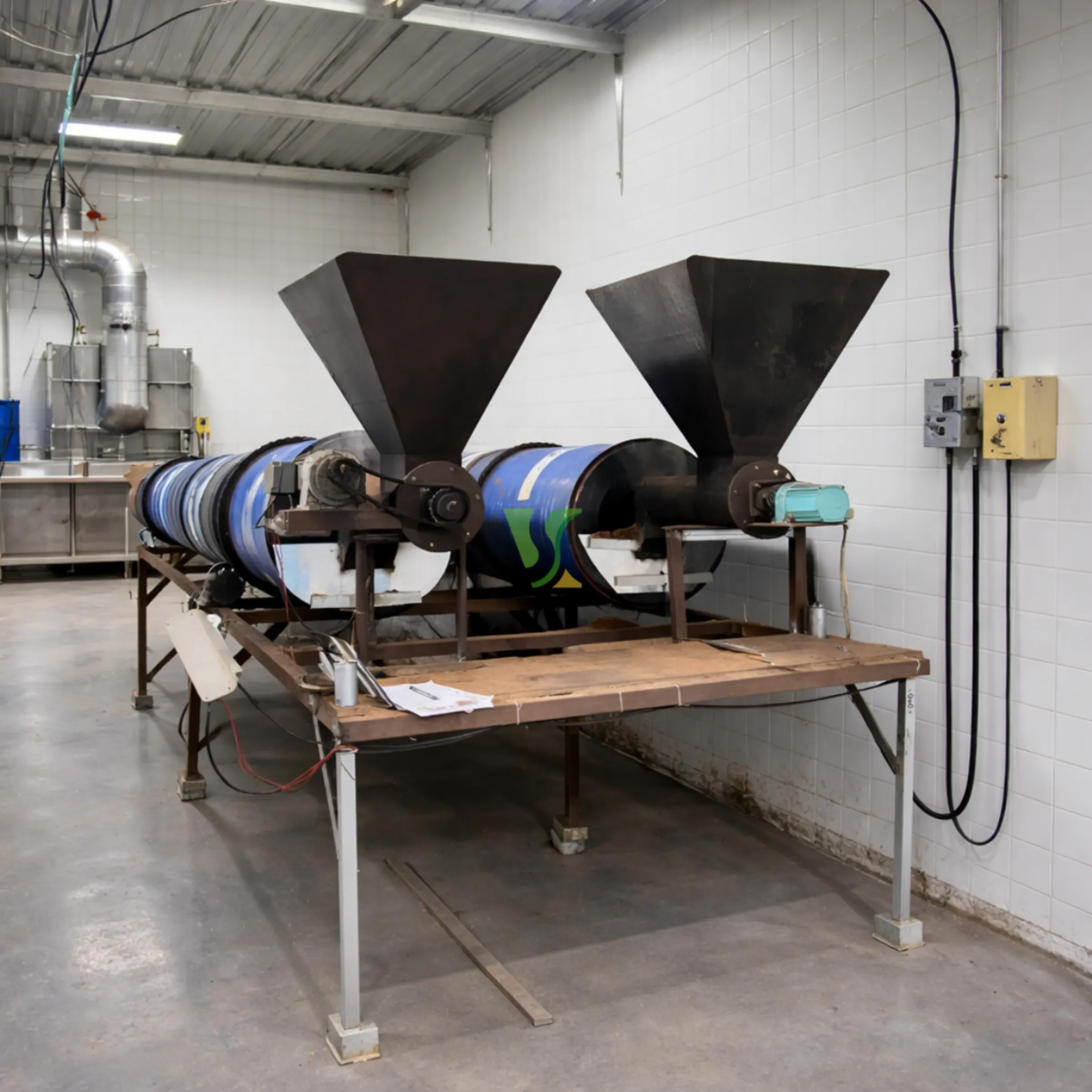
That scrutiny is evidence-based. New Zealand's experience with imported coco peat — a pathway materially similar to Australia's — produced a survey in which 25 new-to-New Zealand weed species were detected in imported coco peat at nursery sites, triggering regulation changes that now require offshore inspection, declared freedom from viable seed, or approved treatment. Australia applies the same logic: coir is an organic matrix that physically supports seed and propagule survival across a three-to-five-week ocean voyage.
| Contaminant Class | How It Is Verified | Production Control at Origin | Consequence if Found |
|---|---|---|---|
| Live insects | Physical inspection of product and container; identification by departmental entomologist if found | Screening and drying of pith; pest-managed, concrete-pad drying areas buffered from vegetation | Consignment held pending identification, then treated, exported, or destroyed |
| Soil, mud, clay | Visual inspection of product, packaging, and all container surfaces | Drying and packing on hardstand, not bare ground; clean storage prior to loading | Held; contaminants must be removed by a departmental-approved method, or goods re-exported / destroyed |
| Viable plant material and seed | Visual inspection; potential sampling where risk material is indicated | Fresh-water washed pith, screened for husk, stick, and kernel fragments; drying areas with vegetated buffer zones | Held for treatment, or re-export / destruction |
| Animal material — faeces, bones, skin, hair | Visual inspection | Enclosed packing environment; sealed, new packaging for every consignment | Same as above |
| Microbiological load | May require a certificate of analysis from a departmental-approved laboratory; absent acceptable certification, goods are secured at an approved arrangement site at the importer's expense pending analysis | Moisture held low and uniform through compression to suppress fungal and bacterial development | Testing delay, demurrage, and importer-borne cost |
The last row is the one most often overlooked by exporters who focus exclusively on EC and pH. Moisture is not only a freight-weight variable. In tropical-to-temperate ocean transit, a block that leaves the press above the specification ceiling will generate condensate inside the bale wrap and the container itself. That is a direct vector for mould, and mould is biosecurity risk material under inspection. This is why CBS maintains a controlled moisture ceiling in the 18–20% band on export blocks rather than shipping at the highest moisture the press can physically hold.
3. Indonesia's Structural Advantage: The Khapra Beetle List
The khapra beetle (Trogoderma granarium) program is Australia's most aggressive stored-product biosecurity regime, and it is the single largest cost differential between coir origins in the Indo-Pacific.
Under the measures, FCL and FCX containers packed with high-risk plant products in a khapra beetle target-risk country must be treated offshore using an approved treatment option — treatments applied within 21 days prior to export, with certification and, where applicable, post-treatment inspection by the exporting country's National Plant Protection Organisation confirming freedom from live Trogoderma species. The approved treatment schedules are methyl bromide at 80 g/m³ for 48 hours at 21 °C, or heat treatment at 60 °C for 120 minutes measured at the core of the goods.
Indonesia is not on the target-risk list. India, Sri Lanka, Bangladesh, Pakistan, Myanmar, Nepal, and Timor-Leste are. On 30 April 2026 DAFF expanded the list further, adding Angola, Chad, Guinea, Jordan, Kazakhstan, Tajikistan, and Tanzania (Turkmenistan was assessed and retained as non-target-risk on the basis of NPPO-supplied evidence).
| Programme Exposure | Indonesian Origin | India / Sri Lanka Origin |
|---|---|---|
| Khapra beetle target-risk country status | Not listed | Listed |
| Mandatory offshore treatment for high-risk plant products | Not triggered by country status | Required for applicable product classes |
| Treatment execution window | Not applicable | Within 21 days prior to export |
| NPPO post-treatment inspection and certification | Not applicable | Required where applicable |
| Container treatment requirement where unpacked in a rural khapra risk postcode | Assessed on goods and delivery postcode | Plus pre-export container treatment |
| Treatment-provider registration obligation | Not applicable | AusTreat-registered and listed as 'approved' provider only |
| Commercial effect | Shorter pre-shipment critical path, no fumigation line item, no risk of invalid certificate | One or two additional treatment days plus certification failure risk |
The practical reading for procurement teams: two shipments of chemically equivalent coir, one Indonesian and one from a listed country, do not carry the same landed risk. The listed-origin shipment carries an additional treatment event whose certificate can be invalidated by an unregistered or suspended treatment provider — and an invalid certificate means onshore treatment or export. Indonesian origin removes that failure mode entirely, and makes short lead times commercially viable.
4. Brown Marmorated Stink Bug: Coir Is Out of Scope, Its Container May Not Be
The 2026-27 BMSB risk season runs from 1 September 2026 to 30 April 2027 inclusive, applying to targeted goods manufactured in or shipped from target-risk countries, and to vessels berthing, loading, or transhipping from them. Coir (HS heading 5305) is not a BMSB target high-risk or target-risk tariff classification, so cocopeat itself requires no BMSB treatment.
Two caveats matter in practice:
- Consolidation contamination. Goods not categorised individually still fall under the measures if they are part of a container or consignment containing target high-risk or target-risk goods. An FCL of coir blocks only is clean; an LCL or FAK box sharing space with steel, machinery, or vehicles is managed at container level before deconsolidation.
- Indonesia is not on the 2026-27 target-risk country list. The emerging-risk category for this season covers the United Kingdom, China, Japan, and the Republic of Korea, and this season DAFF removed the Rolled Goods Policy and the Safeguarding Arrangements Scheme entirely while adding ethyl formate as an onshore treatment option. Exporters consolidating in Singapore or Port Klang should verify the container's bill-of-lading pathway rather than assuming origin alone clears it.
5. Container Hygiene: Where Most Detentions Are Actually Generated
Australia does not inspect every container, but it targets. Containers from known high-risk pathways — Country Action List (CAL) locations — are subject to mandatory six-sided inspection of external surfaces, plus internal inspection of empty containers, on wharf at the discharge port before release. Non-compliance by a pathway increases targeting on that pathway; sustained non-compliance has placed entire trade lanes on the CAL.
The DAFF Sea Container Hygiene System sets the offshore standard. The relevant requirements for a coir-loading facility are concrete:
- Cleaning in a designated area on a concrete or paved surface, not bare dirt, with potholes and cracks addressed to prevent splashback and pest habitat.
- Six-sided cleaning with the container on a stand before the underside is accessed; nozzle held 20 cm from general surfaces and 10 cm from high-risk areas.
- Priority attention to: bottom rails, forklift pockets, twist-lock fittings, door seals, joints, cross members, underside, and container tops. Insects, snails, snail eggs, rodent and gecko activity, soil, and germinating residual seed all concentrate in exactly these locations. A colony or infestation is treated immediately before removal — sweeping is not sufficient.
- Adequate drying time before sealing to avoid internal mould, followed by re-inspection and a hygiene sticker. Washed and treated containers are stored on hardstand in a pest-baited area, physically separated from untreated units, and must be re-treated if the treatment effectiveness date will lapse before arrival.
- Rural Tailgate inspection applies to all sea containers unpacked in classified rural postcodes, inspecting all external surfaces including the underside, then doors, seals, walls, and floor.
- A packing declaration is mandatory for FCL consignments, and for FCL it must include a cleanliness statement confirming the container was cleaned and is free from material of animal or plant origin and from soil. The declaration must be issued by the entity that packed or directly supervised packing the container. Omitting the statement, or mis-declaring who packed, converts a clean consignment into an onshore management case at the importer's cost.
6. Pre-Shipment Control Checklist for Origin Suppliers
| Control Point | Specification / Action | Evidence Generated | Owner |
|---|---|---|---|
| End-use declaration | Match commercial invoice and CoA wording to the lodged BICON pathway; avoid additive-suggestive descriptors | Invoice, CoA, BICON pathway confirmation | Exporter + importer |
| Chemical parameters | Low EC and buffered grades; pH in the 5.8–6.5 band for growth-medium declarations | Batch CoA | Producer |
| Moisture control | Hold export blocks at the 18–20% ceiling to suppress transit mould and condensate | Batch moisture record | Producer |
| Physical cleanliness | Fresh-water washed, screened pith; no husk, stick, kernel, or seed fragments | In-line QC record, pre-packing photo record | Producer |
| Packaging | Clean, new, sealed bales; no reused or soil-contaminated wrap | Packing record | Producer |
| Container washing | Six-sided clean on concrete hardstand; high-risk zones verified; hygiene sticker applied | Washing log, hygiene sticker, pre-load photo record | Consolidator |
| Storage post-wash | Hardstand only, pest-baited, separated from untreated units, treatment validity checked against ETA | Storage log, treatment certificate | Consolidator |
| Packing declaration | FCL cleanliness statement included; signed by the actual packer | Packing declaration | Packer |
| Documentation set | Commercial invoice, packing list, bill of lading, packing declaration, CoA, any required phytosanitary certification | Full document pack pre-departure | Exporter |
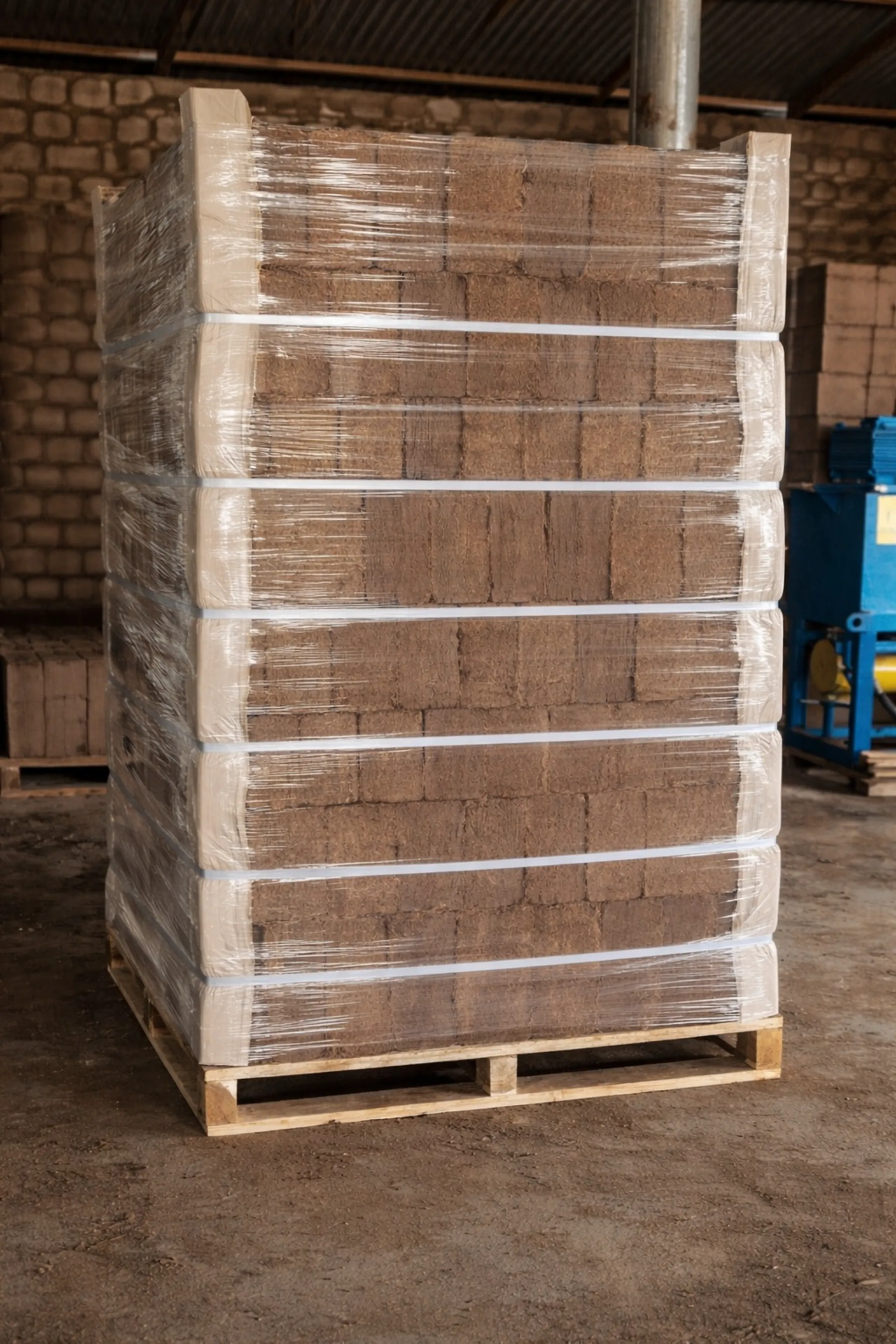
Run this checklist as a gate, not a parallel process. The commercial argument for doing so is straightforward: a container held at an approved arrangement site costs the importer demurrage, treatment, and inspection fees measured in days, and the exporter absorbs the reputational cost on the next tender. A washed six-sided container and a correct packing declaration cost a fraction of that.
Sourcing High-Spec Cocopeat from Sidoarjo, Indonesia
PT Ridha Dua Keluarga produces and exports cocopeat under the Cocopeat Block Sidoarjo (CBS) brand from East Java — an origin that sits outside Australia's khapra beetle target-risk country list, which means no mandatory offshore fumigation event and a substantially shorter pre-shipment critical path than listed-country origins.
Our export programme is built around the compliance surface described in this guide:
- Washed low EC grades — target below 0.5 mS/cm on 1:5 volume extraction, and calcium-buffered grades for CEC-stabilised greenhouse use.
- Controlled moisture — export blocks held in the 18–20% band to suppress transit mould and condensate.
- Single-spec compressed 5kg coir blocks — 30 × 30 × 12–15 cm, 5:1 compression, expanding to 70–75 litres per block. Additive-free formulation, so the BICON Coir peat growth-medium pathway applies rather than the permit pathway.
- Export documentation package — batch Certificate of Analysis, packing list, and packing declaration supporting the importer's lodgement, prepared to match the declared BICON end use.
- Container discipline — loading through Tanjung Perak International Container Terminal (Surabaya), under 45 km from our facility, with washed and inspected containers and pre-load photographic records.
- FCL scale — 24–26 metric tons per 40-foot High Cube, or palletised configurations where the receiving site requires them.
For importers and substrate blenders in Australia, New Zealand, and the wider Asia-Pacific, our technical desk will supply full batch CoA documentation, block samples for grower evaluation, and containerload quotations to your port of discharge. Contact [email protected] or submit an inquiry through the CBS lead form with your target specification, destination port, and required annual volume.
Related Keywords & Topics
Technical Citations & Referenced Standards
Standard testing methods, government regulations, and industry benchmarks cited in this document.
- [1]Australian Department of Agriculture, Fisheries and Forestry (DAFF) — BICON Coir peat import case
- [2]DAFF — List of Target-risk Countries for Host of Khapra Beetle (effective 30 April 2026)
- [3]DAFF — Arrival of goods in Australia: sea container hygiene, Country Action List and rural tailgate inspection
- [4]DAFF — Importing plant products that are applied to soils and plants (permit and production questionnaire requirements)
- [5]DAFF — IIAN 151-2026: Commencement of the 2026-27 Brown Marmorated Stink Bug risk season
- [6]DAFF — Sea Container Hygiene System: minimum offshore hygiene requirements
- [7]Plant Health Centre (Scotland) — PHC2021/02 Plant Waste Disposal: biosecurity concerns with peat-free constituents, including coir
CBS Agronomy Notes
Sourcing 5kg Cocopeat Blocks for Commercial Agriculture?
Receive customized EC/pH lab certificates, container stuffing simulation (palletized or floor loaded), and FOB Tanjung Perak pricing.
Related Technical Notes
View all →
12 October 2026
Cation Exchange Capacity (CEC) in Coir Substrates: Calcium Buffering vs Plain Water Washing
Why raw cocopeat releases potassium and sodium during cultivation, and how calcium nitrate buffering compares with plain water washing on CEC, EC, and crop safety.
10 October 2026
Commercial Peat Moss Ban: Why European Greenhouses Are Switching to Buffered Cocopeat
How European and UK peat phase-out mandates are accelerating commercial greenhouse adoption of washed and buffered cocopeat blocks, and technical agronomic comparisons between sphagnum peat and coconut coir substrates.