5kg Cocopeat Block Export Specifications: Container Loadability, Packaging, and Port Logistics
CBS Agronomy & Export Technical Team
PT Ridha Dua Keluarga • Sidoarjo, East Java, Indonesia
Technical Abstract & Key Parameters
A comprehensive B2B buyer guide for sourcing 5kg cocopeat blocks from East Java, Indonesia: standard block dimensions, palletized vs floor-loaded container capacities, and Tanjung Perak port logistics.
When international commercial growers, horticultural distributors, and substrate manufacturers purchase coconut coir pith in bulk from Indonesia, the standard industry unit of trade is the 5kg Cocopeat Block.
While technical chemical parameters like electrical conductivity (EC) and pH determine crop performance, physical specifications, moisture thresholds, and container loading efficiency directly dictate freight economics and landed cost per metric ton.
This guide details the physical export specifications, container loadability benchmarks, packaging formats, and logistics considerations for sourcing 5kg cocopeat blocks from East Java, Indonesia.
Standard 5kg Block Physical & Chemical Specifications
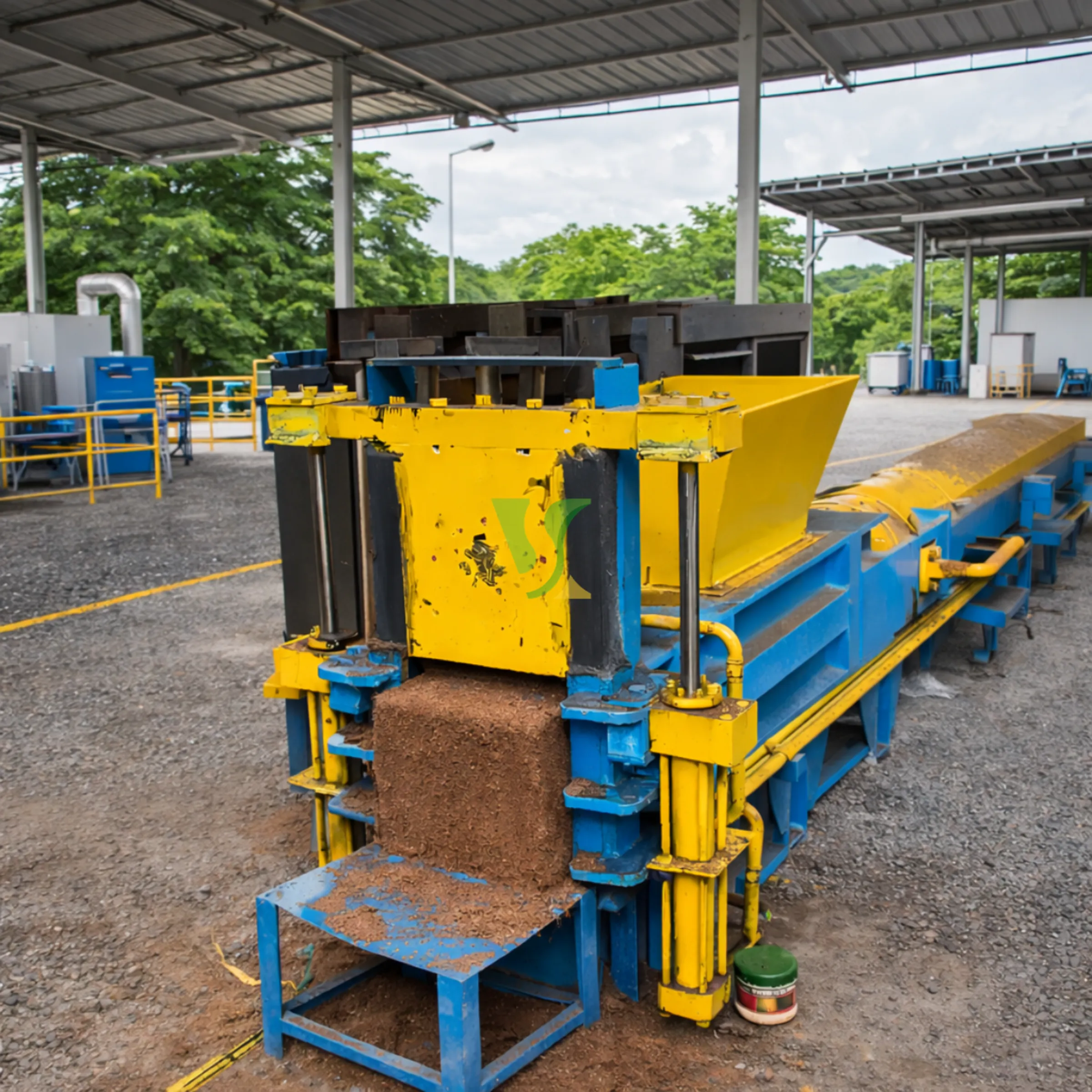
Commercial 5kg blocks are produced by screening raw coir dust, washing with fresh water to target EC requirements, drying, and compressing with 5:1 hydraulic press machinery.
| Specification Parameter | Export Standard (Target Range) | Testing Method / Notes |
|---|---|---|
| Compressed Dimensions | 30 cm × 30 cm × 12–15 cm | Standard five-side hydraulic compression |
| Weight per Block | 5.0 kg (± 200 g tolerance) | Measured at factory packing station |
| Compression Ratio | 5 : 1 | Mechanical hydraulic press |
| Expansion Yield | 70 to 75 Liters per block | Approx. 14–15 Liters per kilogram dry weight |
| Moisture Content | Below 18% – 20% | Critical to prevent mold growth during ocean transit |
| Electrical Conductivity (EC) | Low EC: < 0.5 mS/cm \ | High EC: > 1.5 mS/cm |
| pH Value | 5.5 to 6.5 | Standard horticultural buffer |
| Sand / Impurity Level | Below 3% | Screened through multi-deck rotary sieves |
| Fiber Ratio (Short Fiber) | 10% – 15% | Provides structural pore aeration in expanded media |
Container Loadability: Palletized vs Floor Loaded (40ft High Cube)
Ocean freight represents a significant percentage of the total delivered cost of coir substrate. Importers must choose between palletized loading and bulk floor loading (loose packing) depending on their unloading facilities, labor costs, and container tare weight regulations.
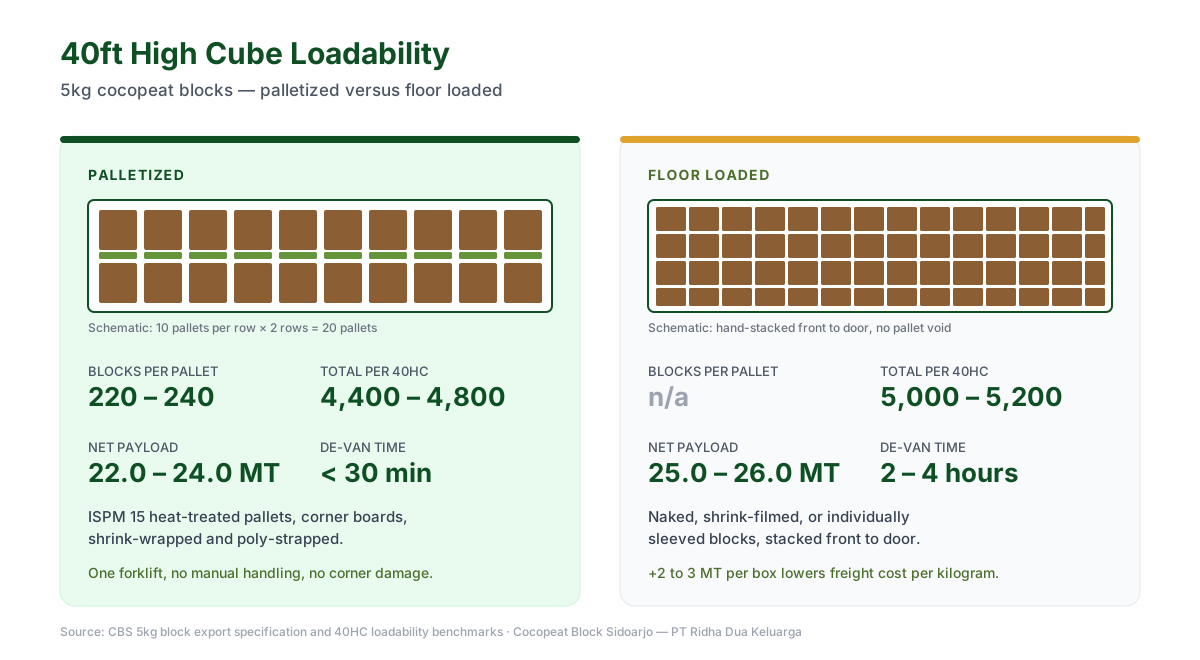
All calculations below refer to a standard 40-foot High Cube (40HC) shipping container.
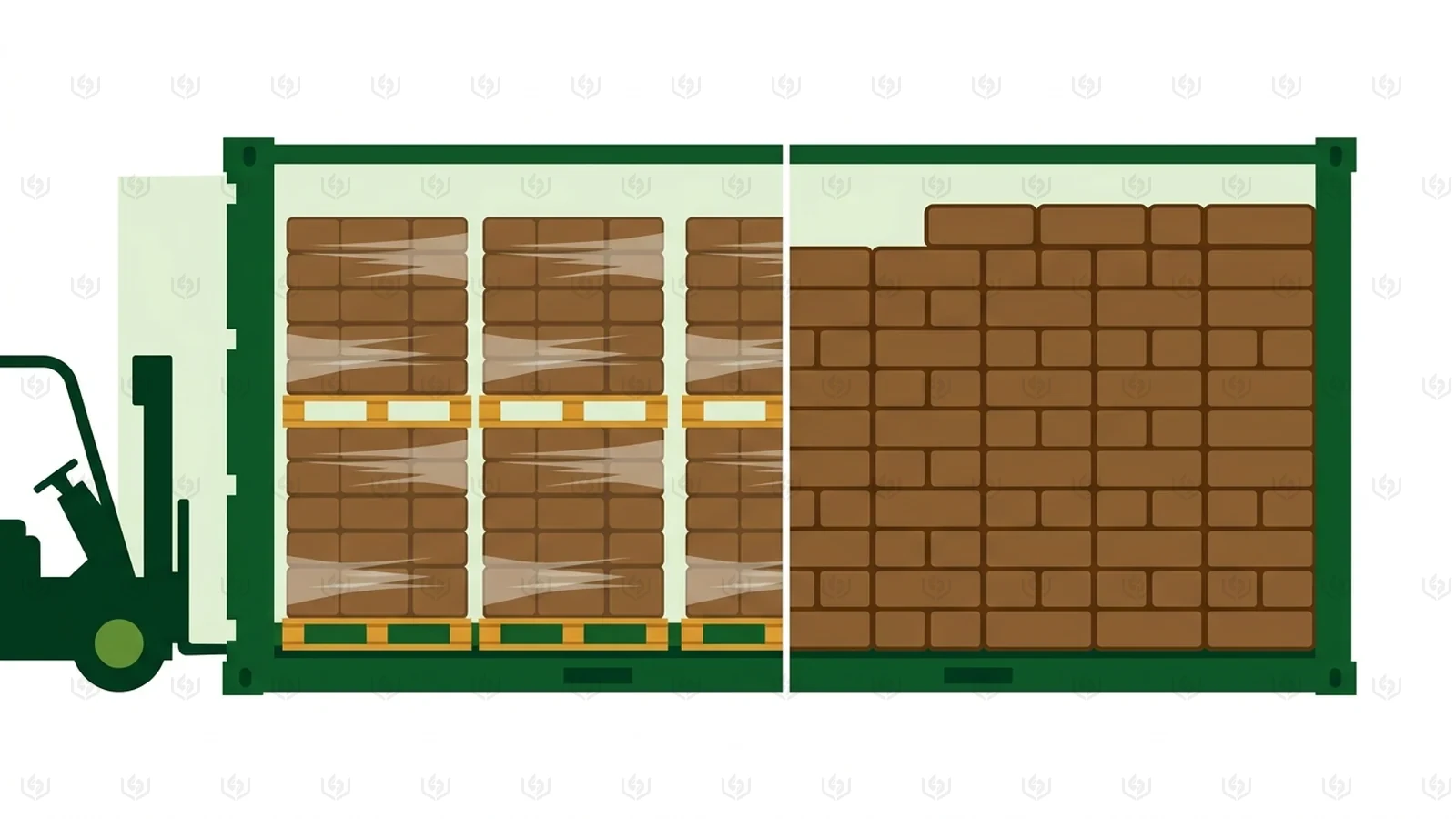
1. Palletized Loading (Forklift Unloading Ready)
In palletized configurations, blocks are stacked on heat-treated wooden pallets (ISPM 15 compliant) or plastic pallets, stabilized with corner boards, shrink-wrapped, and strapped with heavy-duty poly bands.
- Blocks per Pallet: Typically 220 to 240 blocks per pallet.
- Pallet Configuration: 20 pallets per 40HC container (10 pallets per row).
- Total Blocks per 40HC: 4,400 to 4,800 blocks.
- Net Payload: Approximately 22.0 to 24.0 Metric Tons (MT).
- Key Advantage: Fast turn-around at receiving port. A standard warehouse team can de-van a 40HC container in under 30 minutes using a single forklift, eliminating manual handling labor and preventing damage to carton sleeves or block corners.
2. Floor Loaded / Bulk Hand-Stacked (Maximum Payload)
In floor-loaded configurations, individual 5kg blocks (either naked with identification labels, wrapped in shrink-film, or individually sleeved) are hand-stacked directly into the container floor from front to door.
- Total Blocks per 40HC: 5,000 to 5,200 blocks.
- Net Payload: Approximately 25.0 to 26.0 Metric Tons (MT).
- Key Advantage: Maximizes container cubic space and payload up to maximum ocean carrier gross weight allowances. By loading an additional 2 to 3 metric tons per box, the ocean freight cost per kilogram drops significantly.
- Trade-off: Unloading requires manual labor at the destination terminal, requiring 2 to 4 hours per container depending on warehouse crew size.
Strategic Logistics: Factory Location & Tanjung Perak Port
A hidden variable in Indonesian coir procurement is the inland transport distance between production facilities and the sea export terminal. Inland trucking bottlenecks through congested national highways can cause missed vessel cut-offs, moisture re-absorption, or inflated cartage charges.
Our production facility in Krembung, Sidoarjo, East Java enjoys a direct geographic advantage:
- Distance to Port of Tanjung Perak (Surabaya): Approximately 35 kilometers.
- Transport Route: Direct access to Surabaya-Gempol and Surabaya-Porong tollways directly into Pelindo Terminal Petikemas Surabaya (TPS).
- Transit Time: 60 to 90 minutes container drayage from factory loading gate to export container terminal gate.
Tanjung Perak is the second-largest deep-water container hub in Indonesia, offering regular direct feeder and mother vessel sailings to major transshipment hubs (Singapore, Tanjung Pelepas, Port Klang) as well as direct connections to East Asia (China, Japan, South Korea), Australia, and the Middle East.
Required Export Documentation & Quality Assurance
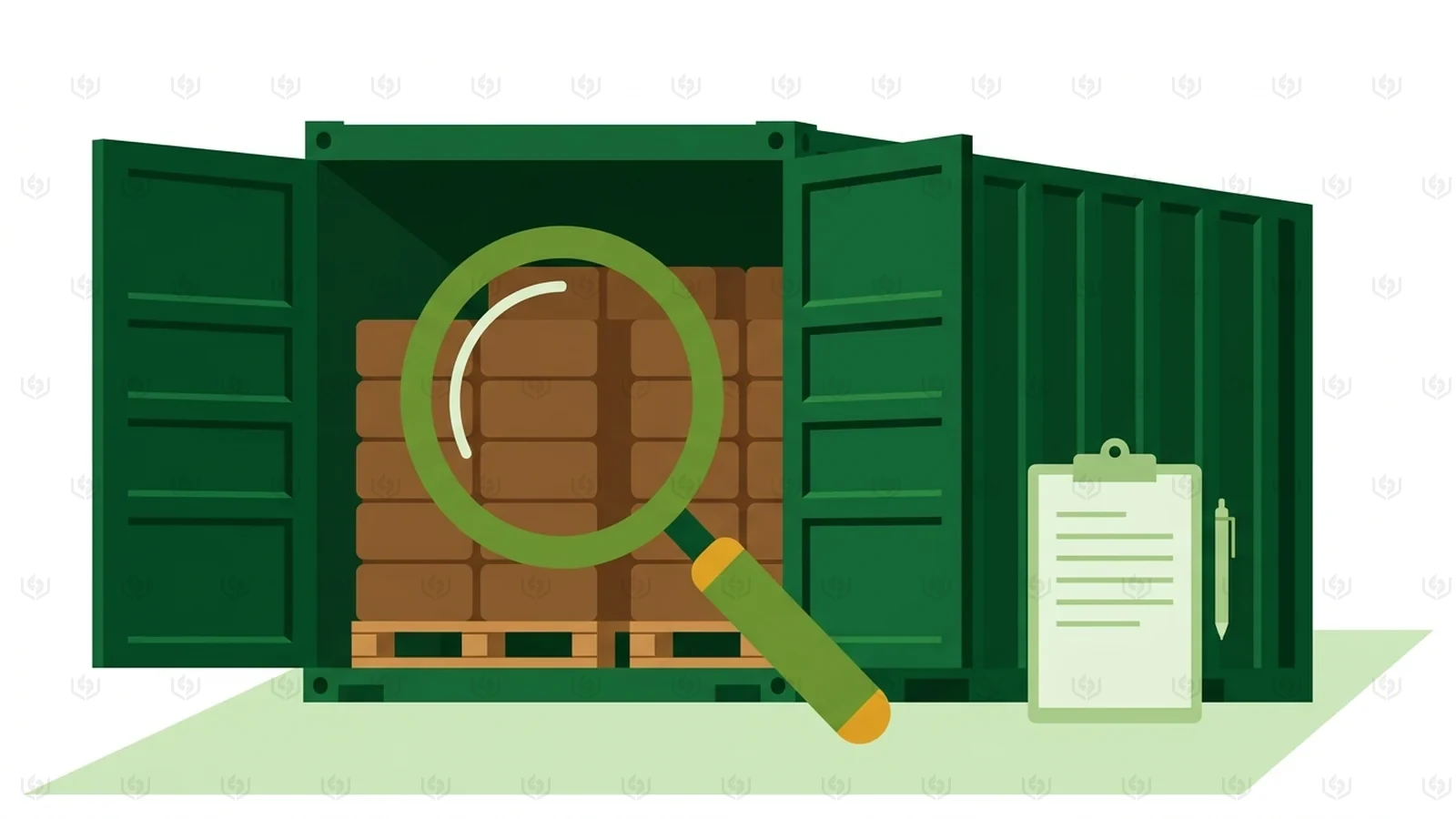
To guarantee smooth customs clearance at destination ports across North America, Europe, Australia, and Asia, every commercial consignment is backed by a complete compliance dossier:
- Certificate of Analysis (CoA): Batch-level documentation confirming moisture content, pH, electrical conductivity (EC), and sieve particle size distribution.
- Phytosanitary Certificate: Issued by the Indonesian Agricultural Quarantine Agency (Badan Karantina Indonesia / Barantin), certifying that the consignment is free from regulated plant pests, soil contamination, and live insects.
- Fumigation Certificate: Performed in accordance with ISPM 15 standards using approved methyl bromide (MB) or phosphine treatments, with authorized exposure duration and temperature logs.
- Certificate of Origin (COO): Official document issued by the Indonesian Ministry of Trade (Form A, Form D, Form AK, Form E, or Ordinary COO) enabling preferential tariff treatment under applicable Free Trade Agreements (FTAs).
- Bill of Lading (B/L) & Commercial Packing List: Clean On-Board B/L confirming container gross/tare weights and seal numbers.
Need a Formal Proforma Invoice or Custom Specification Sheet?
Whether your operations require naked floor-loaded blocks for bulk repacking or palletized Low EC blocks with custom brand sleeves, our export desk provides formal specifications and FOB/CIF quotations based on your target discharge port.
Related Keywords & Topics
Technical Citations & Referenced Standards
Standard testing methods, government regulations, and industry benchmarks cited in this document.
CBS Agronomy Notes
Sourcing 5kg Cocopeat Blocks for Commercial Agriculture?
Receive customized EC/pH lab certificates, container stuffing simulation (palletized or floor loaded), and FOB Tanjung Perak pricing.
Related Technical Notes
View all →
12 October 2026
Cation Exchange Capacity (CEC) in Coir Substrates: Calcium Buffering vs Plain Water Washing
Why raw cocopeat releases potassium and sodium during cultivation, and how calcium nitrate buffering compares with plain water washing on CEC, EC, and crop safety.
12 October 2026
DAFF Biosecurity Compliance: Exporting Cocopeat to Australia Without Costly Delays
BICON coir peat conditions, contaminant limits, container hygiene and khapra beetle exposure for exporting Indonesian cocopeat to Australia.